
Knowing exactly what a nit looks like is one of the most useful skills a parent can have, and it's also one of the most commonly misunderstood. Here's a clear, practical breakdown of what nits actually look like, how they change over time, and how to tell them apart from things that only look similar.
Are nits and lice eggs the same thing?
Yes, completely. "Nit" and "lice egg" describe the exact same thing, there's no meaningful difference between the two terms, and anyone using one is talking about the other.
What colour are nits?
Colour is one of the biggest sources of confusion, mainly because a nit's colour genuinely changes as it develops:
Freshly laid, a nit is pale, often a light golden colour.
As the tiny louse grows inside, the shell gradually darkens toward tan and then medium or dark brown.
Just before hatching, a nit reaches its darkest point, sometimes appearing almost black.
Once it's hatched, the empty shell left behind loses its colour completely, turning pale, white, or translucent.
This natural colour shift is exactly why people sometimes mistake a pale, hatched shell for dandruff, and why colour alone isn't quite enough to identify a nit with full confidence.
Where nits are found on the hair
Nits are laid as close to the scalp as possible, generally within about 6 millimetres, since that's where warmth and humidity are ideal for the egg to develop. As a rough rule: nits sitting close to the scalp and showing colour (brown to black) are more likely to be unhatched and potentially still viable, while pale or white specks found further down the hair shaft have usually already hatched and moved outward as the hair has grown.
How to actually identify a nit, not dandruff
Colour alone can mislead you, especially with the paler, already-hatched shells. Two physical features are far more reliable:
Shape. A genuine nit is teardrop-shaped, never a perfectly round or irregular fleck the way dandruff or dried scalp flakes usually are.
The attachment point. A nit is fixed to the hair using a glue-like substance produced by the female louse. When you try to remove it, that glue often comes away too, leaving what looks like a small tail at one end. Dandruff and debris have no such attachment and no tail, they simply sit loosely on the hair.
If something is teardrop-shaped and has that small tail at one end, it's almost certainly a nit. If it's missing either feature, particularly the tail, it's worth treating with more suspicion rather than certainty.
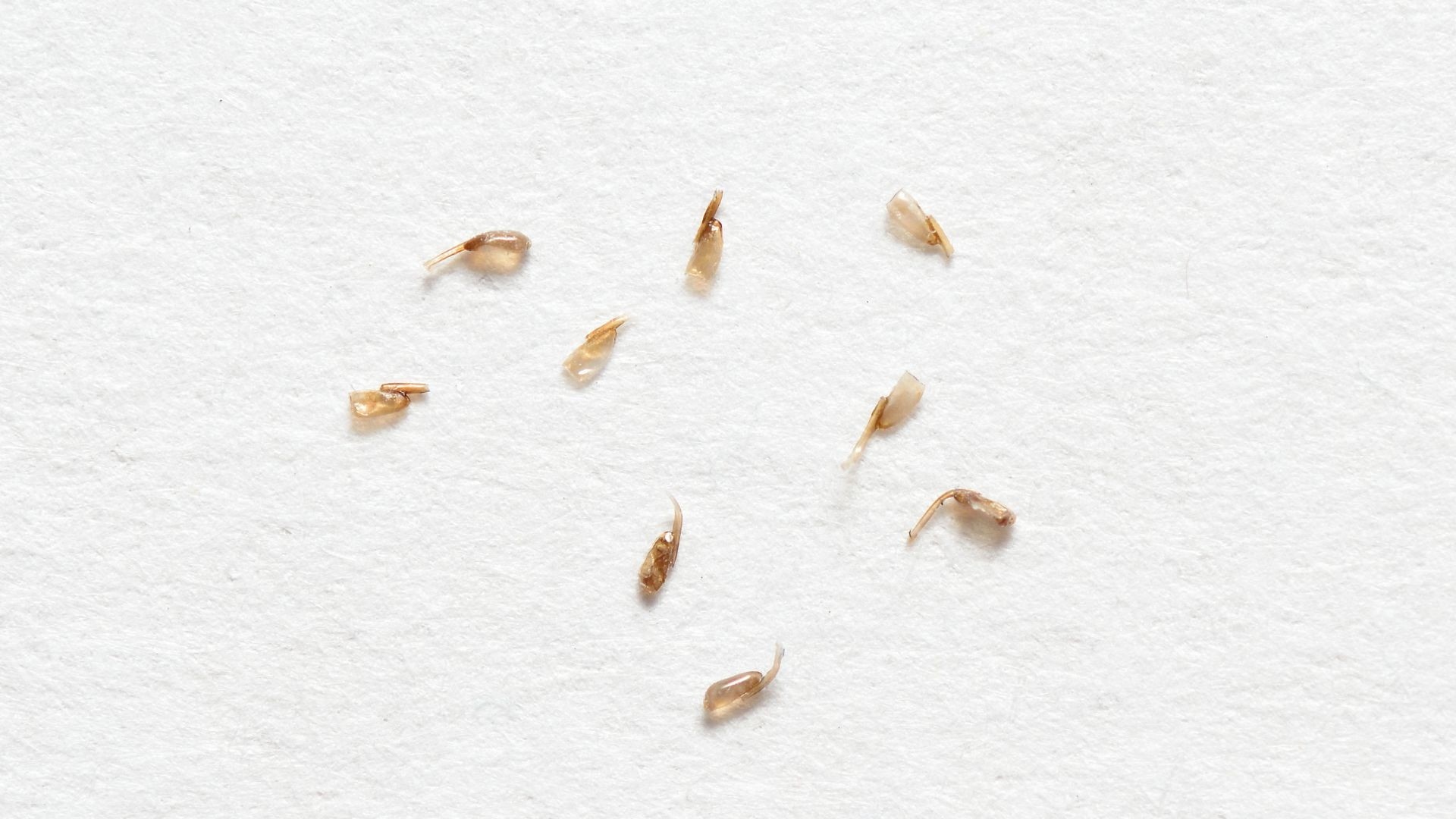
Why a white surface makes checking easier
When combing through hair during a check, wiping the comb onto a plain white paper towel or tissue after each pass makes a real difference. Against a plain white background, it's much easier to judge shape, colour, and whether something has that telltale tail, rather than trying to inspect it while it's still tangled in a section of hair.
Nit or not? A quick way to decide
Ask two questions about anything you find:
Is it teardrop-shaped, rather than round or irregular?
Does it have a small tail at one end, from the glue used to attach it?
If the answer to both is yes, you're almost certainly looking at a nit. If either answer is no, particularly the tail, it's more likely dandruff, product residue, or general debris.
Nit vs. not a nit, at a glance
Feature | Nit (lice egg) | Not a nit |
|---|---|---|
Shape | Teardrop shaped | Round or irregular |
Attachment | Firmly glued, with a tail | Sits loosely, no tail |
Colour | Brown to black (unhatched), pale or clear (hatched) | Varies, often white or grey |
Removal | Needs a firm pull or scrape | Flakes off easily |
Frequently asked questions
Is a nit the same as a lice egg?
Yes, they're the exact same thing, just two different names for it.
What colour are nits before they hatch?
They start pale or light golden and darken toward brown, then almost black, as the egg develops.
How do I know if something is a nit or just dandruff?
Check the shape and the attachment point. A nit is teardrop-shaped with a small tail from its glue, and it won't flick or brush off easily. Dandruff has neither feature and comes away with a light touch.
Does the position on the hair shaft matter?
Yes. Nits close to the scalp are more likely to be unhatched. Ones further down the hair shaft have usually already hatched as the hair has grown.
What does an already-hatched nit look like?
Pale, white, or translucent, since the colour comes from the developing louse inside, which is no longer there once it's hatched.
Not sure what you've found?
[Book now] and we'll take care of the rest. See if we service your suburb here. If you can't see your suburb, be sure to contact us for a custom quote based on your area.